Oleo Bone
@oleobone

NC vs CNC Grinding Machine – Complete Comparison for Industrial Grinding Applications

Choosing between an NC grinding machine and a CNC grinding machine depends on production requirements, operator skill, application flexibility, and automation needs. Both machine types deliver high-precision grinding performance; however, they differ in programming method, operation style, cycle flexibility, and application capability.

Moreover, This guide explains the complete difference between NC and CNC grinding machines for industrial grinding applications such as pump shafts, motor rotors, bearings, bushes, and precision engineering components.

What is an NC Grinding Machine?

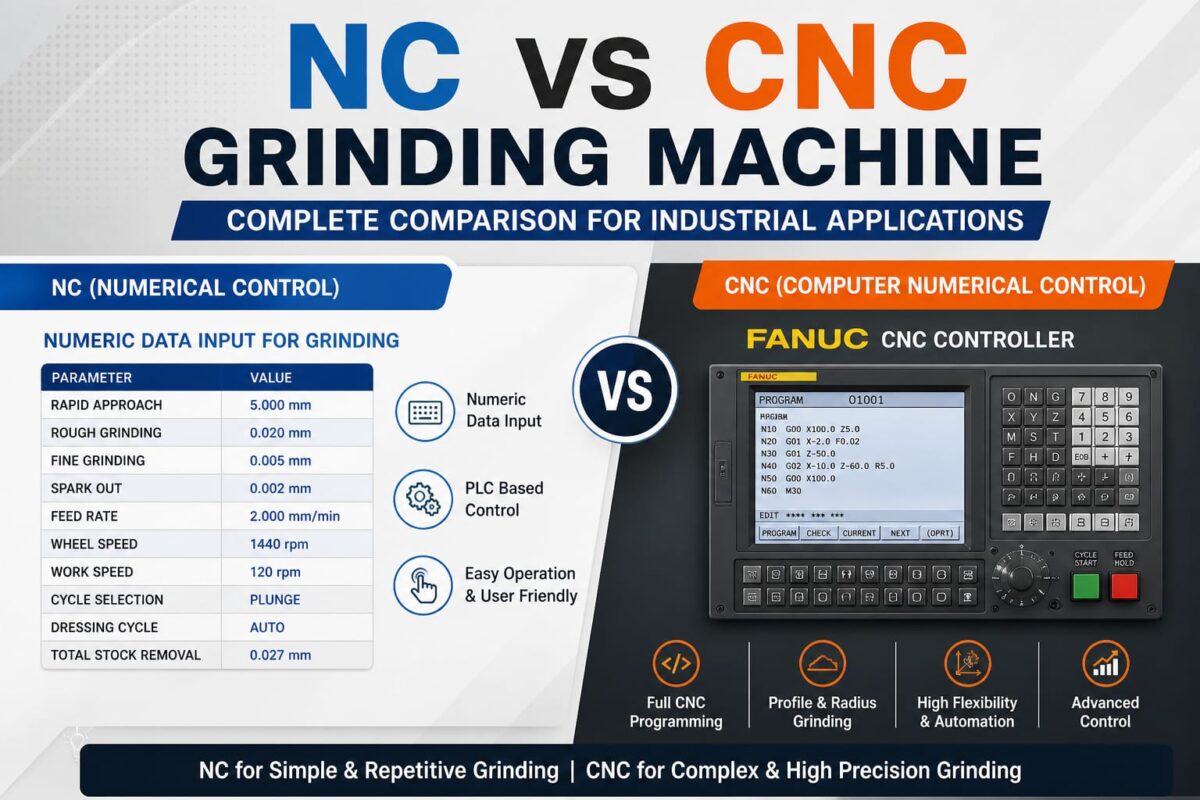
An NC (Numerical Control) grinding machine operates through a PLC-based control system with touch pad HMI, servo motors, and drives. Operators enter numeric grinding values such as rough grinding, fine grinding, spark-out, and grinding cycle selection.

Additionally, NC grinding machines provide easy operation without requiring advanced CNC programming knowledge. The NC grinding machine operates through a high-end PLC and HMI automation technology with touch pad HMI, servo motors, and drives.

👉 Explore machine: NC Cylindrical Grinding Machine

What is a CNC Grinding Machine?

A CNC grinding machine operates through a fully programmable CNC controller system. The machine performs grinding operations according to stored programs and supports advanced grinding applications such as taper grinding, profile grinding, and radius grinding.

Moreover, CNC grinding machines provide higher flexibility and advanced automation for complex industrial applications.

CNC grinding machines commonly use advanced Siemens CNC controller systems for flexible grinding applications. Additionally, manufacturers also prefer Fanuc CNC controller systems for high-speed and critical industrial automation.

👉 Explore machine: CNC Cylindrical Grinding Machine

NC vs CNC Grinding Machine Comparison

FeatureNC Grinding MachineCNC Grinding Machine
Control SystemPLC + HMI + Servo DrivesCNC Controller + Servo Drives
OperationEasy and user-friendlyRequires programming knowledge
ProgrammingNumeric data inputFull CNC programming
Grinding ApplicationsStraight diameter grindingStraight diameter and profile – radius foam grinding
Cycle TypesPlunge & oscillationPlunge & oscillation
Cycle SwitchingEasy switching mode through HMIProgram modification required
FlexibilityUp to 6 diameters in one settingUnlimited program flexibility
Dressing CompensationAuto compensation availableAuto compensation available
Profile DressingStraight wheel dressingRadius/profile dressing possible
Manual/Semi-Auto ModeAvailableLimited
In-Process GaugingCompatibleCompatible
Storage CapacityLimitedHigh
Operator SkillLowMedium to high
Production CapacityHighHigh

Multi-Diameter Grinding Capability in NC Grinding Machine

The EMTU Plus Series NC Cylindrical Grinding Machine includes specially developed pre-programmed grinding logic. Therefore, the machine can grind up to 6 different diameters in a single setting regardless of diameter size or length.

Operators can separately select:

  • Plunge grinding cycle
  • Oscillation grinding cycle

for each individual diameter.

For example:

  • 2 diameters can run in plunge grinding mode
  • while 3 diameters can run in oscillation grinding mode
  • within the same machine setting.

As a result, NC grinding machines provide excellent flexibility for repetitive industrial production without requiring complex CNC programming.

Plunge vs Oscillation Grinding Cycle Difference

Meanwhile, both NC and CNC grinding machines support plunge and oscillation grinding cycles.

However, NC grinding machines allow operators to instantly switch between cycles using a simple switching selection in the HMI touch panel.

In contrast, CNC grinding machines require separate programs or program modifications for changing grinding cycles.

Therefore, NC grinding machines offer easier shop-floor operation for repetitive jobs.

Radius & Profile Grinding Capability in CNC Machines

CNC grinding machines support radius and profile dressing through synchronous movement of machine axes.

As a result, operators can generate:

  • Radius profiles
  • Taper profiles
  • Foam/track grinding profiles
  • Complex wheel dressing shapes

Therefore, CNC grinding machines are highly suitable for:

  • Bearing grinding applications
  • Radius profile grinding
  • Track grinding applications

Automation & Compensation Systems

Both NC and CNC grinding machines support:

  • Automatic grinding compensation
  • Auto dressing compensation
  • Servo-controlled movement
  • In-process gauging system compatibility

Additionally, manufacturers can integrate:

  • Gantry-type auto loading unloading systems
  • Robotic automation systems
  • Mass production automation solutions

As a result, improve productivity and reduce manpower requirements.

👉 Learn more about productivity: Enhancing Productivity in Grinding Machines

Which Grinding Machine Should You Choose?

Choose NC Grinding Machine if you need:

  • Easy operation
  • User-friendly HMI control
  • Straight diameter grinding
  • Semi-auto flexibility
  • Lower operator skill requirement
  • Repetitive production jobs

Choose CNC Grinding Machine if you need:

  • Radius or profile grinding
  • Advanced automation
  • Multiple grinding applications
  • High flexibility
  • Complex grinding cycles

Grinding Machine Applications Across Industries

NC and CNC grinding machines are widely used in:

  • Pump industry
  • Motor industry
  • Bearing industry
  • Automotive industry
  • Precision engineering industries

👉 Related applications: Pump and Motor Grinding Applications

👉 Bearing applications: Bearing Grinding Machine Applications

Benefits of Modern Grinding Automation

Modern grinding industries require high productivity and dimensional consistency. Therefore, manufacturers increasingly prefer NC and CNC grinding machines for repetitive industrial applications. Additionally, automatic grinding compensation improves accuracy during long production cycles. Meanwhile, in-process gauging systems help reduce rejection and manual measurement. As a result, industries achieve better surface finish, lower downtime, and improved production efficiency.

Grinding Machine Supply Across India

We supply grinding machines across India for industrial applications.

Why Industries Prefer NC and CNC Grinding Machines

Industrial manufacturers require stable production, accurate grinding performance, and easy machine operation. Therefore, many industries prefer NC and CNC grinding machines for repetitive and precision grinding applications. For example, pump shaft and motor rotor manufacturers use these machines for consistent dimensional control and surface finish.

Meanwhile, automatic grinding compensation helps operators maintain size accuracy during long production cycles. In addition, in-process gauging systems reduce manual inspection and minimize rejection. Consequently, manufacturers improve productivity while reducing downtime and operator dependency.

On the other hand, CNC grinding machines provide better flexibility for profile and radius grinding applications. Similarly, NC grinding machines offer easier operation and faster cycle switching for repetitive production jobs. As a result, both machine types remain highly popular in industrial grinding applications.

Additionally, modern grinding machines improve production flexibility and reduce manual intervention. Moreover, automatic compensation systems help operators maintain dimensional accuracy during repetitive grinding cycles. Meanwhile, in-process gauging systems reduce rejection and improve process stability. Consequently, manufacturers achieve better productivity, improved surface finish, and consistent grinding performance.

Practical Shop Floor Advantages

In many industrial applications, operators prefer simple and reliable grinding operation. Therefore, NC grinding machines help manufacturers reduce operator training requirements and improve production stability. Meanwhile, CNC grinding machines provide advanced flexibility for profile and radius grinding applications.

For example, pump shaft grinding applications usually require repetitive straight diameter grinding. In contrast, bearing and motor rotor applications may require profile grinding or multiple grinding cycles. Consequently, manufacturers select machine types according to production requirements and component complexity.

Moreover, automatic grinding compensation systems maintain dimensional consistency during long production runs. Similarly, in-process gauging systems reduce manual inspection and improve quality control. As a result, industries achieve better productivity, lower rejection, and stable grinding performance.


Contact Us for Grinding Machine Solutions

Looking for the right grinding machine for your industrial application?

👉 Contact Us for Grinding Solutions

Share your component drawing and production requirements for suitable machine recommendations.


FAQs – NC vs CNC Grinding Machine

What is the main difference between NC and CNC grinding machines?

NC machines operate through numeric data input and HMI controls, while CNC machines operate through fully programmed grinding cycles.

Which grinding machine is easier to operate?

NC grinding machines are easier to operate because operators only need to enter basic numeric grinding values.

Can NC grinding machines handle multiple diameters?

Yes, NC grinding machines can handle up to 6 different diameters in a single setting according to developed programming logic.

Which machine is suitable for profile grinding?

CNC grinding machines are suitable for radius and profile grinding applications.

Are plunge and oscillation cycles available in both machines?

Yes, both machine types support plunge and oscillation grinding cycles.

Is in-process gauging compatible with both machines?

Yes, both NC and CNC grinding machines support in-process gauging systems.

Which machine is better for repetitive production?

NC grinding machines are highly suitable for repetitive production because of easy operation and quick cycle switching.

Which machine is better for complex grinding applications?

CNC grinding machines are better for complex profile, taper, and radius grinding applications.

Do both machines support automation?

Yes, both machines support automatic grinding compensation and loading automation systems.
What is Cylindrical Grinding Machine? (Complete Guide)

April – 2026

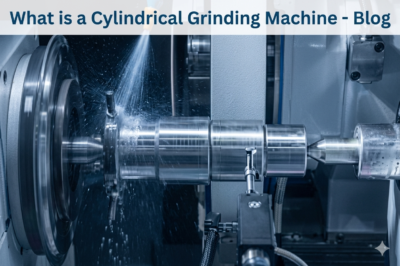
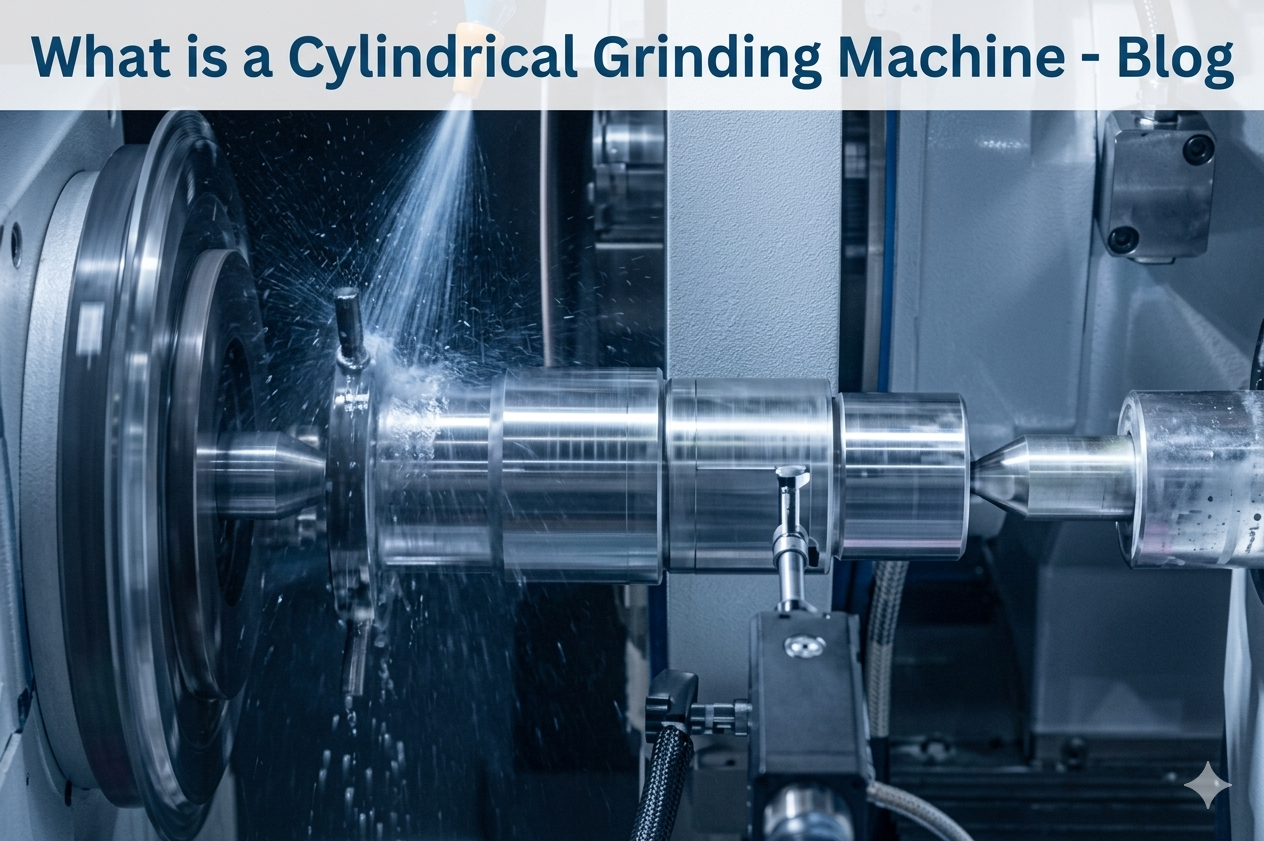
Close-up of cylindrical grinding machine process with grinding wheel finishing a steel shaft

Introduction

A cylindrical grinding machine is a precision engineering tool used to finish cylindrical components with high accuracy and superior surface finish. This advanced grinding equipment is widely used in industries such as automotive, aerospace, and heavy engineering where tight tolerances and consistency are essential.

What is a Cylindrical Grinding Machine?

A cylindrical grinding machine is used to remove material from the outer surface of a rotating workpiece. The process involves a high-speed abrasive wheel that precisely shapes the component to achieve the required diameter and finish.

This precision grinding machine is commonly used for:

  • Shafts
  • Rods
  • Bearings
  • Precision components

Unlike conventional machining, a cylindrical grinder ensures micron-level accuracy and excellent repeatability.

How Does It Work?

The working principle of this grinding process involves:

  • The workpiece rotates between centers
  • The grinding wheel rotates at high speed
  • Controlled feed removes material gradually
  • Multiple passes ensure fine surface finish

Cylindrical grinding is a type of abrasive machining process. Learn more about Grinding (abrasive cutting) to understand the fundamentals.

Key Components

A typical cylindrical grinding system consists of:

  • Grinding wheel
  • Workhead
  • Tailstock
  • Machine bed
  • Wheel head
  • Control system (Manual / NC / CNC)

Types of Cylindrical Grinding Machines

1. Hydraulic Cylindrical Grinding Machine

  • Simple operation
  • Cost-effective
  • Ideal for small-scale industries

Explore: Hydraulic Cylindrical Grinding Machine

2. NC Grinding Machine

  • Semi-automatic control
  • Better repeatability
  • Suitable for medium production

Explore: NC Grinding Machine

3. CNC Grinding Machine

  • Fully automatic operation
  • High precision and productivity
  • Best for mass production

Explore: CNC Cylindrical Grinding Machine

Advantages

✔ High precision and accuracy
✔ Excellent surface finish
✔ Consistent production quality
✔ Reduced manual errors
✔ Suitable for batch and mass production

Industrial Applications

This industrial grinding equipment is widely used in:

  • Automotive industry
  • Aerospace sector
  • Tool and die manufacturing
  • Heavy engineering
  • Railways

Read more: Applications of Cylindrical Grinding Machine

Availability Across Industrial Cities

We supply precision grinding machines across major manufacturing hubs such as:

Visit our city pages to explore local supply and support.

How to Choose the Right Machine

Selecting the right machine depends on:

  • Production volume
  • Required accuracy
  • Budget
  • Automation level

Also read:

  • CNC vs Hydraulic vs NC Grinding Machine
  • How to Choose Grinding Machine

Conclusion

A cylindrical grinding machine plays a critical role in modern manufacturing by delivering precision, consistency, and superior surface finish. Whether you choose a hydraulic, NC, or CNC model, selecting the right solution will significantly improve your production quality.

Call to Action

Looking for the best grinding solution for your application?
Contact Elitech Machine Tools today for expert guidance and customized machine recommendations.

FAQs

Q: What is a cylindrical grinding machine used for?

It is used for finishing cylindrical components like shafts and rods with high precision.

Q: Which type of grinding machine is best for production?

CNC grinding machines are ideal for high-volume and precision production.

Q: What industries use cylindrical grinders?

Automotive, aerospace, railways, and engineering industries commonly use them.

Improving Surface Finish in Cylindrical and Internal Grinding

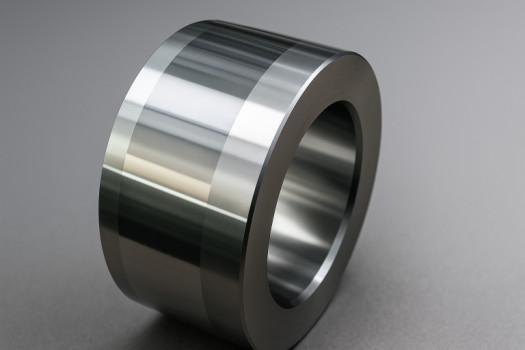
Cylindrical metal component with dual surface finishes on smooth gray background

April – 2026

Achieving superior surface finish in cylindrical and internal grinding is critical for precision components used in automotive, aerospace, and engineering industries. At Elitech Machine Tools, we provide advanced grinding solutions designed to deliver consistent accuracy, improved productivity, and excellent surface quality.


🔹 Understanding Surface Finish in Grinding

Surface finish in grinding is commonly measured in Ra values. Lower Ra values indicate smoother surfaces:

  • 0.4 Ra → Fine grinding finish
  • 0.2 Ra → High-precision super finish

Achieving these finishes depends on the right combination of machine capability, grinding wheel, and process parameters. Our Cylindrical Grinding Machines are engineered to meet these demanding surface finish requirements.


🔹 1. Optimizing Grinding Parameters

Adjusting grinding parameters is the most effective way to improve surface finish.

Key Adjustments:

  • Increase wheel speed (within safe limits)
  • Reduce feed rate for finer finish
  • Lower depth of cut during final passes
  • Increase spark-out or dwell time

Modern CNC Cylindrical Grinding Machines allow precise control of these parameters, ensuring repeatability and consistent surface quality.

For bore finishing applications, our Internal Grinding Machines provide excellent control over work speed and in-feed rates, which is critical for achieving fine internal surface finishes.


🔹 2. Grinding Wheel Selection and Dressing

The grinding wheel plays a major role in determining surface finish.

Best Practices:

  • Use finer grit size for smoother finish
  • Select proper bond type (vitrified preferred for precision)
  • Perform regular dressing to avoid glazing

Reducing dressing depth and traverse speed results in a smoother wheel face, which directly improves the workpiece finish.


🔹 3. Coolant Application and Filtration

Proper coolant delivery ensures:

  • Effective heat dissipation
  • Removal of grinding chips
  • Prevention of surface scratches

A well-designed coolant system, like those integrated into Elitech grinding machines, helps maintain consistent performance. You can explore our full range of solutions on the Elitech homepage.


🔹 4. Machine Condition and Stability

Machine condition has a direct impact on surface finish quality.

Important Factors:

  • Wheel balancing to prevent vibration
  • Machine rigidity for stable operation
  • Proper alignment of workpiece and centers

Our machines are built with high structural rigidity and precision components to ensure vibration-free grinding and consistent results.


🔹 5. Achieving Better Surface Finish in OD & ID Grinding

For Cylindrical (OD) Grinding:

  • Reduce feed rate and depth of cut
  • Increase spark-out passes
  • Maintain proper wheel dressing

For Internal (ID) Grinding:

  • Reduce workpiece RPM
  • Increase dwell time
  • Use oscillation in plunge grinding

Using the right machine is critical—our Internal Grinding Machines are specifically designed for high-precision bore finishing.


🔹 6. Applications Across Industrial Cities

Elitech Machine Tools supplies high-performance grinding machines across major manufacturing hubs in India. If you are looking for solutions in your region, explore our city-specific pages:

These locations represent key industrial zones where precision grinding solutions are in high demand.


🔹 Conclusion

Improving surface finish in cylindrical and internal grinding requires a balanced approach involving:

  • Optimized grinding parameters
  • Proper wheel selection and dressing
  • Efficient coolant application
  • Stable and well-maintained machines

At Elitech Machine Tools, we offer advanced grinding technology to help manufacturers achieve superior surface finishes with high efficiency.

👉 Need expert guidance or machine selection support?
Connect with us through our Contact Page today.

CBN vs Diamond Grinding Wheel: Complete Comparison & Applications

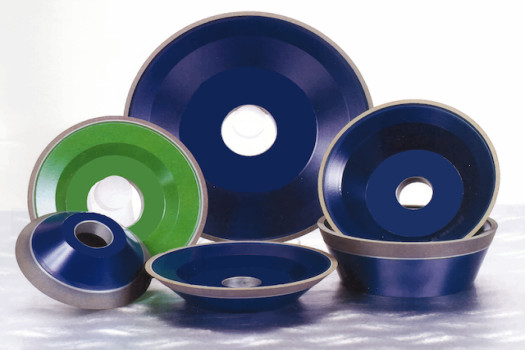
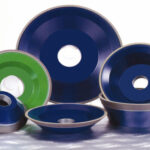
"CBN grinding wheel cutting metal workpiece"
April – 2025

Choosing the right grinding wheel is critical for achieving high precision, longer tool life, and superior surface finish. Additionally, selecting the correct wheel improves overall grinding efficiency and consistency. Therefore, selecting the right grinding machine plays a key role in achieving optimal results.

At Elitech Machine Tools, our advanced grinding solutions are designed to deliver optimal performance with the right wheel selection for every application. This guide will help you understand the difference between CBN and diamond grinding wheels and how to choose the right one.


🔹 What is a CBN Grinding Wheel?

A CBN (Cubic Boron Nitride) grinding wheel is a superabrasive tool specifically designed for machining ferrous materials such as hardened steel. Moreover, manufacturers widely use CBN wheels for grinding hardened steel due to their excellent thermal stability.

✅ Key Features:

  • High thermal resistance
  • Excellent wear resistance
  • Maintains sharp cutting edges
  • Ideal for high-speed grinding

🔧 Applications:

CBN wheels are widely used in:

  • Hardened steel grinding
  • Automotive components
  • Bearing manufacturing

They are commonly used with cylindrical grinding machines for achieving consistent accuracy and surface finish.


🔹 What is a Diamond Grinding Wheel?

A diamond grinding wheel uses industrial diamonds as abrasive particles and is best suited for non-ferrous and hard materials. In contrast, diamond wheels perform better when machining non-ferrous and brittle materials such as carbide and ceramics.

✅ Key Features:

  • Extremely high hardness
  • Superior cutting ability
  • Ideal for brittle materials
  • Excellent dimensional accuracy

🔧 Applications:

Diamond wheels are used for:

  • Carbide tools
  • Ceramics and glass
  • Composites and non-metal materials

These wheels are often used in precision applications involving internal grinding machines, where high surface finish is required.


🔹 CBN vs Diamond Grinding Wheel (Key Differences)

However, selecting between CBN and diamond grinding wheels depends on the material and application requirements.

Feature CBN Wheel Diamond Wheel
Best for Ferrous materials (steel) Non-ferrous materials (carbide, ceramics)
Thermal stability Very high Moderate
Wear resistance High Very high
Chemical reaction with iron No Yes (not suitable for steel)
Surface finish Excellent Superior for hard materials

🔹 When to Use CBN vs Diamond Grinding Wheel

👉 Use CBN Grinding Wheel When Working with Hardened Steel. Additionally, they Perform well in High-temperature Applications.:

  • Grinding hardened steel
  • High-temperature applications
  • Continuous production environments

👉 On the Other Hand, Use Diamond Grinding Wheels for Carbide and Ceramic Materials.

  • Grinding carbide or ceramics
  • Non-ferrous materials
  • High-precision finishing applications

Selecting the correct wheel directly impacts surface finish. You can learn more in our detailed guide on improving surface finish in cylindrical and internal grinding. In contrast, the performance of diamond wheels differs significantly when used on non-ferrous materials.


🔹 Impact on Surface Finish

Both CBN and diamond grinding wheels play a crucial role in achieving fine surface finishes such as:

  • 0.4 Ra → Fine grinding finish
  • 0.2 Ra → High-precision super finish

When combined with optimized parameters and the right machine, these wheels help deliver consistent results. Our CNC Cylindrical Grinding Machines allow precise control of grinding parameters to achieve these finishes.


🔹 Machine Compatibility and Performance

The performance of grinding wheels also depends on machine capability. Therefore, using advanced CNC grinding machines ensures better control and consistency. At Elitech Machine Tools, we offer advanced grinding solutions designed for both CBN and diamond applications.

Explore our solutions across key industrial locations:


🔹 How to Choose the Right Grinding Wheel

When selecting between CBN and diamond grinding wheels, consider:

  • Workpiece material (ferrous vs non-ferrous)
  • Required surface finish
  • Production volume
  • Machine capability

Choosing the wrong wheel can lead to poor finish, higher wear, and increased costs. Additionally, proper grinding parameters improve consistency and surface finish in precision applications.


🔹 Conclusion

In conclusion, understanding the difference between CBN and diamond grinding wheels helps manufacturers make better decisions. Finally, selecting the right wheel based on material and application ensures optimal performance and surface finish.

  • Use CBN wheels for steel and high-temperature applications
  • Use diamond wheels for carbide and non-ferrous materials

At Elitech Machine Tools, we help manufacturers select the right grinding solutions to achieve superior performance and surface finish. Finally, choosing the correct grinding wheel ensures better productivity and longer tool life.

👉 Looking for expert guidance or the right grinding machine?
Contact us through our Contact Page today.


🔹 FAQ (SEO Booster)

Q: Can diamond grinding wheels be used on steel?

No, diamond reacts with iron at high temperatures, leading to rapid wear.

Q: Why is CBN preferred for steel grinding?

CBN offers excellent thermal stability and does not react with ferrous materials, making it ideal for steel.

Q: Which wheel gives better surface finish?

Both can achieve excellent finishes, but the choice depends on the material being ground.

Grinding Wheel Dressing Tips: Improve Performance & Surface Finish

April – 2025

Grinding wheel dressing is a critical process for maintaining grinding efficiency, achieving superior surface finish, and extending wheel life. In modern manufacturing, proper dressing and truing techniques ensure consistent performance and precision.

At Elitech Machine Tools, we provide advanced grinding solutions designed to deliver high accuracy and optimal surface quality across industries.


🔹 What is Grinding Wheel Dressing?

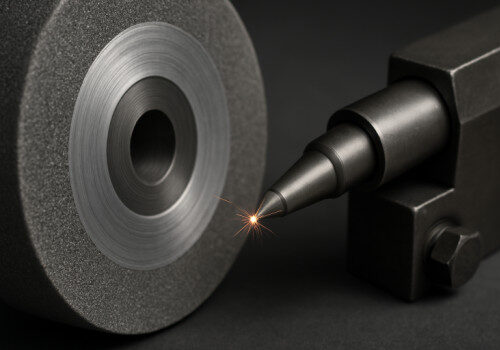
Grinding wheel dressing is the process of sharpening the wheel by removing dull abrasive grains and exposing fresh cutting edges.

Additionally, dressing helps:

  • Restore cutting ability
  • Improve surface finish
  • Reduce grinding forces

Proper dressing ensures the wheel performs efficiently in operations carried out on cylindrical grinding machines and other precision equipment.


🔹 What is Truing in Grinding?

Truing restores the shape and geometry of the grinding wheel.

In contrast to dressing:

  • Dressing sharpens the wheel
  • Truing corrects wheel alignment and roundness

Therefore, both processes are essential for achieving high accuracy and consistent grinding results, especially in CNC cylindrical grinding machines.


🔹 Importance of Grinding Wheel Dressing

Grinding wheel dressing directly impacts productivity and quality.

Moreover, proper dressing:

  • Improves surface finish
  • Reduces vibration and chatter
  • Enhances dimensional accuracy
  • Increases wheel life

As a result, manufacturers achieve better performance and lower operational costs.

To understand how dressing affects finish quality, read our detailed guide on
👉 improving surface finish in grinding.


🔹 Types of Dressing Tools

Selecting the right dressing tool is equally important.

👉 Common Types:

  • Single-point diamond dresser
  • Multi-point diamond dresser
  • Rotary diamond dresser

Additionally, each tool offers different levels of precision and wear resistance depending on the application.


🔹 Grinding Wheel Dressing Tips (Best Practices)

Follow these practical tips to improve grinding performance:

✅ 1. Use Correct Dressing Parameters

Use appropriate feed rate and depth of cut. Lower values produce a smoother wheel surface.

✅ 2. Maintain Proper Dressing Frequency

Dress the wheel regularly to avoid loading and glazing.

✅ 3. Optimize Dressing Speed

Additionally, slower dressing speeds improve surface finish quality.

✅ 4. Ensure Proper Coolant Application

Coolant helps remove debris and prevents overheating during dressing.

✅ 5. Use the Right Dressing Tool

Select a suitable diamond dresser based on material and grinding operation.


🔹 Do’s and Don’ts of Diamond Dressing Tools

✔ Do’s:

  • Use proper mounting and alignment
  • Maintain consistent dressing parameters
  • Inspect the dresser regularly

❌ Don’ts:

  • Avoid excessive dressing depth
  • Do not use worn-out dressers
  • Avoid improper alignment

🔹 Machine Compatibility and Performance

Grinding performance depends not only on the wheel but also on machine capability.

Therefore, using high-quality machines ensures better results. At Elitech, our solutions support precise dressing and grinding operations, including:


🔹 Benefits of Proper Grinding Wheel Dressing

Proper dressing delivers multiple advantages:

  • Better surface finish (up to 0.2 Ra)
  • Improved grinding efficiency
  • Reduced machine vibration
  • Longer wheel life
  • Consistent dimensional accuracy

Finally, these benefits lead to higher productivity and reduced costs.


🔹 Conclusion

In conclusion, grinding wheel dressing plays a vital role in achieving precision, efficiency, and surface quality in grinding operations.

Additionally, combining proper dressing techniques with advanced machines ensures optimal results. At Elitech Machine Tools, we help manufacturers improve grinding performance with reliable and high-precision solutions.

👉 Looking to improve your grinding process?
Get expert guidance through our Contact Page today.


🔹 FAQ

Q: What is grinding wheel dressing?

Grinding wheel dressing sharpens the wheel by removing dull grains and exposing fresh abrasives.

Q: Why is dressing important in grinding?

It improves surface finish, reduces vibration, and increases grinding efficiency.

Q: What is the difference between dressing and truing?

Dressing sharpens the wheel, while truing restores its shape and alignment.

Taper Correction Tips for Internal Grinding Applications

26 March 2025

When performing internal grinding, taper issues are among the most frequently encountered problems. Taper occurs when the bore diameter becomes progressively larger or smaller towards one or both ends, sometimes forming an hourglass or barrel-shaped profile.

Here are six effective solutions to troubleshoot and resolve taper issues:

Solution #1: Change Your Oscillation Stroke

If the bore is smaller on one end, the ends may not be exposed to the grinding wheel enough. Conversely, if the bore is larger at the ends, the center may be receiving excessive grinding. Adjusting the oscillation stroke length can resolve this imbalance.

  • Increase Stroke Length: Extend the stroke further into one or both ends to ensure uniform exposure.
  • Reduce Stroke Length: Minimize the stroke to reduce grinding at the ends and allow more time in the center.

Refer to the following figure for ID grinding oscillation adjustment tips.

Solution #2: Dress a Reverse Taper into the Wheel

Deflection can occur when the grinding wheel applies pressure, causing the wheel to slightly bend. This misalignment can produce taper in the bore.

  • Reverse Dressing: Dress a compensating reverse taper into the wheel to counteract deflection.
  • Wheel Inspection: Regularly inspect the wheel’s shape to ensure accuracy.

Solution #3: Increase Spark-Outs

Spark-outs allow time for the wheel to oscillate without feeding, relaxing accumulated forces.

  • Extend Spark-Out Time: Add an extra 1-2 seconds to reduce taper by eliminating deflection.
  • Monitor Results: Adjust the spark-out duration based on bore quality.

Solution #4: Retract and Regrind

For a faster alternative to extended spark-outs:

  • Retract the Wheel: Temporarily pull back to release deflection forces.
  • Regrind: Perform a brief regrind cycle for taper correction.

Solution #5: Sharpen the Wheel for Aggressiveness

A dull wheel causes excessive deflection. Sharpening the wheel reduces this effect.

  • Aggressive Dressing: Use sharper dressing parameters to maintain wheel sharpness.
  • Regular Maintenance: Ensure consistent wheel condition for optimal performance.

Solution #6: Make a Taper Adjustment on Your Machine

Some machines offer taper adjustment through work head or spindle swivel settings.

  • CNC Adjustments: Use control settings for quick and precise taper adjustments.
  • Manual Adjustments: On older machines, perform mechanical adjustments cautiously to avoid misalignment.

Final Thoughts

While machine adjustments can sometimes solve taper issues, addressing root causes using these best practices is preferable. Elitech Machine Tools recommends starting with oscillation adjustments and spark-outs before considering mechanical interventions. By following these solutions, you can minimize taper problems and achieve optimal grinding results.

Taper Setting Tips
Taper Setting Tips for Internal Grinding Application

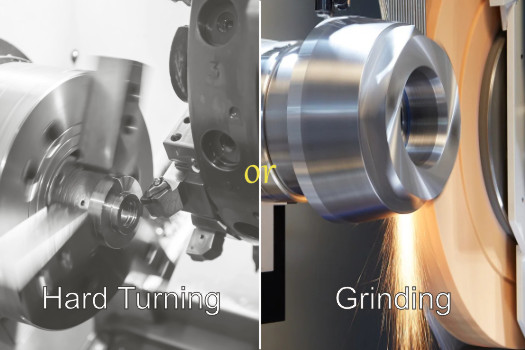
Hard Turning or Grinding – Why Grinding is the Better Choice

17 March 2025

Advancements in CNC turning centers and cutting tools have significantly improved the feasibility of hard turning. However when it comes to precision, cost-effectiveness and process stability, grinding often emerges as the superior choice. At Elitech, we firmly believe that grinding provides better results in many applications.

Elitech is well-known for its Cylindrical OD and ID CNC Grinders, offering cutting-edge solutions for precision grinding. While our expertise extends to both hard turning and grinding, we frequently recommend grinding over hard turning for several key reasons:

1. Superior Surface Finish Tolerance and Roundness

Grinding is unmatched in achieving the highest surface finish standards, holding size tolerance as tight as below 0.010 mm and delivering roundness within 2 microns. Hard turning, while effective, struggles to maintain such consistency across large production runs.

2. Cost-Effective for Hard Materials

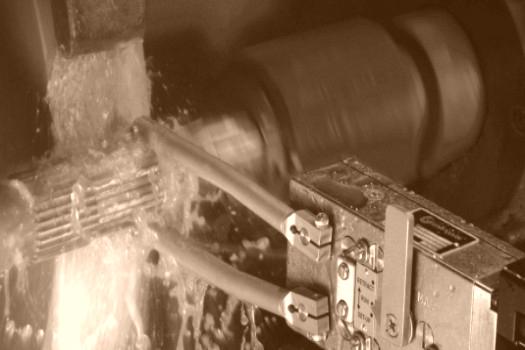
Grinding provides a more economical and stable process for materials like ceramic, carbide, which require diamond (PCD or CVD) inserts in turning operations. These inserts wear out quickly, leading to frequent replacements and size variations. In contrast, grinding wheel experience gradual wear and can be dressed to maintain cutting efficiency without stopping production.

3. No Risk of “Lead” on Shaft

A common issue in hard turning is the lead pattern, a spiral texture left by the cutting tool. This surface defect can cause premature seal failures in critical components. Grinding eliminates this issue completely, ensuring a perfectly smooth surface.

4. Grinding Meets Industry Standards

Many industries-including automotive, aerospace, bearing manufacturing – mandate ground finishes for critical components. In such cases, grinding is the only viable option to meet stringent quality requirements.

5. Handles Interrupted Cuts Without Tool Damage

Workpieces with features like keyways or splines create interrupted cuts, which can damage cutting inserts in turning. Grinding wheels, however, are not affected by such interruptions, making them a more reliable choice for complex geometries.

6. Grinding Wheels Offer Better Tool Life & Cost efficiency

A single grinding wheel can last for minimum 10,000 parts before needing replacement, making it significantly more cost-effective than frequently replaced turning inserts.

For example, consider a grinding wheel with a diameter 400 mm and width of 40 mm. The wheel will run until its diameter reaches 300 mm. If 0.010 mm per-piece dressing is applied, the wheel can be changed after 10,000 pieces.

  • Grinding Wheel Grade: A60-L5-V10 (commonly used for hardened materials like EN-8, EN-24, EN-31).
  • Wheel Cost (Estimate in Year 2025): ₹ 4,000.00
  • Cost Per 10,000 Components: ₹ 4,000.00
  • Per-Piece Grinding Wheel Cost: ₹ 0.40

Now, compare this with CNC hard part turning:

  • CNC Tool Cost (Estimate in Year 2025): ₹ 600.00 per insert
  • Tool Change Frequency: After every 50 pieces (angle shift)
  • Tool Corners Available: 3 per tool (total 150 pieces per tool)
  • Per-Piece Insert Cost: ₹ 4.00

This means that grinding is 10 times more cost-effective than hard turning when considering tooling expenses alone.

7. Minimal Downtime, Maximum Productivity

In CNC lathe, inserts must be frequently changed due to wear, causing production downtime. Grinding wheels, on the other hand, last much longer, reducing machine stoppages and increasing throughput.

Consult the Experts at Elitech

Choosing between hard turning and grinding is not always straightforward. It requires in-depth knowledge of both processes to determine the most efficient and cost-effective approach. At Elitech, our team of experts and technology partners can help you make the right decision based on your specific application.

While we continue to expand awareness of high-performance grinding solutions, our ultimate goal is to maximize your productivity and efficiency. If you are looking for precision, consistency and saving, grinding is the way forward!

For expert consultation and cutting-edge grinding solution, contact Elitech today.


Enhancing Productivity in Grinding Machines Without Skilled Operators

16 March 2025

Grinding is a crucial process in manufacturing, particularly when it involves high-value parts that have already undergone significant machining. A Cylindrical Grinder, for example, works on components that have likely been pre-machined on a lathe/CNC turning. If an error occurs during grinding, it could mean scrapping an expensive part, leading to wasted time, materials and machining efforts.

However, the challenge of finding skilled grinding operators is increasing. While skilled machinists are already scarce, experienced grinding specialists are even harder to find. Simultaneously, shrinking lead times and competitive pressures are forcing manufacturers to bring grinding operations in-house rather than relaying on external suppliers. This shift creates a need for efficient, reliable, grinding processes that do not rely on highly skilled operators.

The Role of Automation in Grinding Efficiency

To address the shortage of skilled labor while maintaining high precision and productivity, automation is becoming a key solution. Elitech Machine Tools, a Gujarat, India based manufacturer of production grinding machines, supports companies in implementing automation-driven grinding solutions.

One of the most effective automation techniques in grinding is in-process gauging. While traditionally used as an inspection tool, in-process gauging serves as a productive enhancer in grinding machines. Here’s how:

  • Real-Time Monitoring: The gauging system measures the workpiece during the grinding process and sends real-time data to the machine control system.
  • Automatic Adjustments: The machine can self-correct based on measurement trends, adjusting for changes in the grinding wheel diameter.
  • Extended Wheel Life: Automated adjustment reduce the frequency of wheel dressing, minimize wear and tear, and improving efficiency.
  • Consistency And Accuracy: The system maintains tight tolerances with minimal human intervention, reducing error and improving overall product quality.
The Future of Grinding with Limited Skilled Labor

As industries move towards automation, manufacturers that invest in smart grinding technologies can overcome the skilled labor shortage while boosting productivity. Elitech Machine Tools continues to help companies adapt by offering advanced grinding solutions that integrate automation, ensuring reliable and high-precision grinding without the need for expert operators.

By leveraging technology like in-process gauging, manufacturers can safeguard their machining investments, minimize rejections, and optimize grinding efficiency-ultimately making production more cost-effective and competitive.

Precautions for Grinding Wheel

15 March 2025

Grinding Wheels are essential in metalworking but must be handled, stored and used with care to prevent damage and accidents. Here are key precautions to follow:

1. Proper Storage & Handling

  • Store in a dry, temperature-controlled area, away from impacts.
  • Inspect new and used wheels for cracks or damage before use.
  • Carry wheels carefully-never drop or roll them. Use a hand truck or forklift for heavy wheels.

2. Safe Mounting

  • Perform a ‘ring test’ to check for cracks before mounting.
  • Ensure the wheel’s center hole fits snugly without forcing it.
  • Use clean, flat flanges and tighten the spindle nut just enough to hold the wheel securely.
  • Match directional wheels to the correct rotation.

3. Machine & Grinding Safety

  • Make sure all guards and covers are in place before starting the machine.
  • Let the wheel run at full speed for at least one minute before grinding.
  • Never exceed the maximum RPM of the wheel.
  • Grind gently-avoid excessive pressure that could cause overheating or brakeage.

4. The Ring Test

  • Suspend or place the wheel vertically on a hand surface.
  • Tap with a wooden handle 1-2 inches from the edge at a 45 degree angle.
  • A clear ring indicates a good wheel; a dull sound may mean cracks.
  • Always test before mounting, especially after storage.

Final Tip: Following these precautions ensures safe operation, prolongs wheel life and prevent accidents. Always prioritize safety when using grinding wheels.

Share Your Requirement • Discuss on WhatsApp Chat with Elitech about grinding machine requirement on WhatsApp
Send Your Requirement | Application | Drawing via Email