
September, 2026
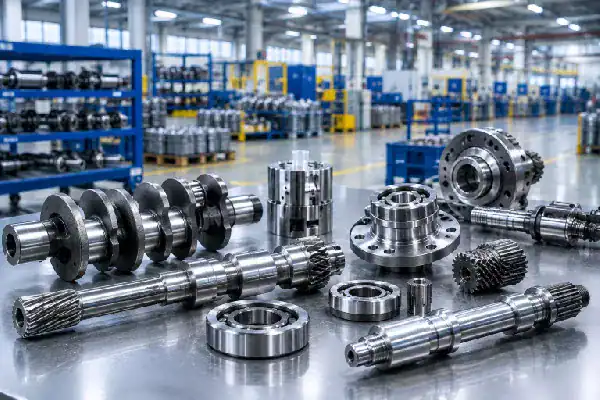
Auto parts grinding machine applications are essential for achieving high dimensional accuracy, consistent geometry and controlled surface finish in automotive components. Shafts, bearing seats, bores, journals, shoulders and precision diameters often require grinding after turning, forging, heat treatment or hardening.
Automotive components require high dimensional accuracy, consistent geometry and controlled surface finish. These requirements become especially important on shafts, bearing seats, bores, journals, shoulders and precision diameters. An automotive grinding applications provides a controlled finishing solution for these applications after turning, forging, heat treatment, hardening and other machining operations.
Automotive and auto ancillary manufacturers commonly use grinding for transmission shafts, gear shafts, axles, hubs, bearing components, steering components, fuel-injection parts, camshaft-related components and other precision cylindrical parts.
However, the right grinding machine depends on several factors. Component geometry, grinding operation, production quantity, dimensional requirements, surface finish and the required level of automation all influence machine selection.
For an introduction to the technology, read our guide to cylindrical grinding machine.
Why Grinding Is Important in Automotive Component Manufacturing
Automotive components normally pass through several manufacturing operations before reaching their final functional dimensions. Turning, milling and forging establish the basic shape. Heat treatment and induction hardening can then provide the required material properties.
Even after these operations, critical surfaces may need further finishing. This is where grinding becomes important.
A grinding operation can help manufacturers achieve:
- Precise outside diameters
- Accurate internal bores
- Controlled roundness and cylindricity
- Consistent surface finish
- Accurate shoulders and faces
- Concentricity between functional surfaces
- Consistent dimensions across production batches
- Controlled finishing of hardened surfaces
Therefore, grinding serves as an important precision finishing operation in automotive manufacturing. It is not simply a final machining step.
Major Auto Parts Grinding Machine Applications for Automotive Components
Selecting an auto parts grinding machine should be based on component geometry, grinding operation, production quantity, dimensional tolerance and required surface finish.
Different automotive components require different grinding operations. Therefore, manufacturers should select the machine according to the component geometry and the surfaces that require finishing.
1. Transmission Shafts and Gear Shafts
Transmission and gear shafts often contain multiple diameters, journals, shoulders, bearing locations and internal features.
Common grinding operations include:
- Bearing journal grinding
- Shaft diameter grinding
- Stepped diameter grinding
- Shoulder grinding
- Front-bore grinding
- Internal bearing-seat grinding
For long shafts with a front bore, a CNC internal grinding machine for long shafts can provide a dedicated solution.
Elitech’s i 100 is developed for front-bore grinding applications on long shaft components. As a result, it can be considered for applications such as transmission and automotive shaft components.
2. Automotive Shafts and Axles
Automotive shafts and axles contain functional cylindrical surfaces that often require accurate grinding after machining and heat treatment.
Typical applications include:
- Axle journals
- Bearing seats
- Stepped shaft diameters
- Precision cylindrical surfaces
- Hardened shaft surfaces
For these applications, a CNC cylindrical grinding machine with straight wheel head can provide a suitable solution for precision OD grinding.
The straight-wheelhead configuration works well for conventional external cylindrical grinding. It can therefore be considered for automotive shafts, transmission shafts, bearing journals and similar cylindrical components.
3. Wheel Hubs and Bearing Locations
Wheel hubs and similar automotive components often contain critical bearing locations. These surfaces require controlled dimensions, roundness and surface finish for reliable assembly.
Depending on the component design, manufacturers may grind:
- Bearing bores
- Internal diameters
- External cylindrical surfaces
- Bearing seats
- Shoulders and faces
For internal grinding applications, a CNC internal grinding machine should be selected according to the bore diameter, grinding depth, component length, workholding arrangement and production volume.
In particular, internal grinding becomes important when the finished bore acts as a functional bearing, shaft or assembly location.
4. Automotive Components Requiring Face and OD Grinding
Some automotive components require both outside-diameter grinding and accurate face or shoulder grinding.
Examples include:
- Transmission shafts
- Stepped shafts
- Automotive shaft components
- Components with shoulders
- Parts requiring controlled face-to-diameter relationships
In such cases, an angular wheel head CNC cylindrical grinding machine can provide a suitable configuration for combined face and OD grinding operations.
The angular-wheelhead arrangement can be useful when the component requires grinding of related cylindrical and face or shoulder surfaces.
5. Camshaft and Crankshaft-Related Components
Camshaft and crankshaft-related components contain precision cylindrical surfaces. Consequently, manufacturers need to control dimensions, roundness and surface finish carefully.
Depending on the component design, grinding may include:
- Journal grinding
- OD grinding
- Bearing surface grinding
- Precision cylindrical grinding
- Selected shoulder and face grinding
The machine selection should consider the component geometry, grinding length, number of operations, workholding arrangement and required production cycle.
6. Fuel-Injection and Other Precision Automotive Components
Fuel-injection components and other precision automotive parts may require closely controlled cylindrical dimensions and surface finish.
Typical applications include:
- Precision shafts
- Plungers
- Cylindrical pins
- Sleeves
- Injection-related components
- Hardened precision components
For these applications, several factors influence the final result. Machine rigidity, grinding spindle performance, wheel specification, dressing capability, coolant management and measurement methods all play an important role.
Internal Grinding Applications in Automotive Parts
Internal Grinding Applications in Automotive Parts
Not every automotive component requires external diameter grinding. Many components contain functional internal surfaces that require accurate bore grinding.
Common applications include:
- Transmission gear-shaft bores
- Bearing bores
- Bushes
- Sleeves
- Precision housings
- Internal bearing seats
- Other cylindrical internal surfaces
The appropriate CNC internal grinding machine depends on the bore diameter, grinding depth, component length, workholding arrangement and production volume.
For long shaft components with a front bore, manufacturers can consider a dedicated long-shaft internal grinding configuration. This approach can provide a more suitable solution than using a conventional short-component internal grinding arrangement.
Choosing an Auto Parts Grinding Machine for Automotive Components
There is no single grinding-machine configuration for every automotive component. Instead, machine selection should begin with the component drawing and the actual grinding requirements.
Component Geometry
First, identify the surfaces that require grinding:
- Outside diameter
- Internal diameter
- Face
- Shoulder
- Taper
- Multiple diameters
- Radius or profile
The component geometry directly affects the machine configuration and grinding cycle.
Production Quantity
Production quantity also plays an important role.
For medium-volume production, an NC grinding machine can provide programmed automatic grinding cycles with a relatively straightforward operating structure.
On the other hand, CNC grinding offers greater programming flexibility for complex components and applications that require synchronized machine movements.
For a detailed comparison, read CNC, hydraulic and NC grinding machines.
Grinding Accuracy and Surface Finish in Automotive Components
Automotive grinding involves more than achieving the final component diameter. Depending on the application, manufacturers may also need to control several geometric and surface characteristics.
These include:
- Roundness
- Cylindricity
- Concentricity
- Taper
- Parallelism
- Perpendicularity
- Surface roughness
- Dimensional consistency
Several machine elements contribute to the final grinding result. These include machine rigidity, guideway design, grinding spindle, wheel specification, dressing system, workholding arrangement, coolant conditions and grinding parameters.
For this reason, machine rigidity and guideway design deserve careful consideration when selecting a grinding machine for automotive production.
For more information, read V-Flat guideways vs linear guideways in grinding machines.
Grinding Wheel and Dressing Considerations
Grinding wheel selection should match the component material, hardness, grinding operation and required surface finish.
Many automotive components undergo heat treatment or hardening before grinding. Consequently, the final material condition can influence wheel selection and grinding parameters.
The wheel specification, dressing method and dressing frequency should therefore be considered together with the grinding machine and production cycle.
For production applications, controlled dressing and compensation can help maintain consistent grinding conditions as the wheel wears.
Furthermore, CNC grinding systems can provide greater flexibility for complex dressing and grinding operations when the application requires it.
CNC Grinding for Automotive Production
CNC grinding becomes particularly useful when automotive components involve multiple operations, complex geometry or flexible production requirements.
Depending on the machine configuration, CNC grinding can provide:
- Flexible grinding programs
- Multiple grinding operations
- Automated grinding cycles
- Dressing cycles
- Wheel-wear compensation
- Synchronized axis movement
- Radius and profile grinding capability
- Reduced manual intervention
- Consistent production cycles
However, CNC should not be considered automatically superior simply because it uses CNC control.
With comparable mechanical and feedback systems, NC and CNC machines can have similar axis positioning accuracy and repeatability. The key CNC advantage is programming flexibility, complex-cycle capability and synchronized multi-axis operation.
For example, an NC machine can be highly effective for predefined grinding cycles and specific production requirements. In contrast, CNC provides greater flexibility for complex profiles, advanced dressing operations and synchronized movements.
Therefore, manufacturers should select the control system according to the component and production process rather than choosing CNC simply because it is a newer control technology.
Straight Wheel Head vs Angular Wheel Head
The wheel-head configuration should match the surfaces that require grinding and the required grinding arrangement.
Straight Wheel Head
A straight-wheelhead CNC cylindrical grinding machine is particularly suitable for conventional OD grinding applications such as:
- Automotive shafts
- Transmission shafts
- Bearing journals
- Motor shafts
- Cylindrical components
For these applications, see the CNC cylindrical grinding machine with straight wheel head.
Angular Wheel Head
An angular-wheelhead configuration can be useful when a component requires suitable combinations of OD and face or shoulder grinding.
Typical applications include:
- Transmission shafts
- Stepped shafts
- Shoulder grinding
- Face and OD grinding
For these applications, see the CNC cylindrical grinding machine with angular wheel head.
Ultimately, the component drawing and required grinding operations should determine the wheel-head configuration.
Quality Requirements in Automotive Manufacturing
Automotive suppliers operate under demanding quality requirements. Therefore, process consistency, dimensional control and traceability remain important throughout production.
The IATF 16949 automotive quality management system provides a recognized quality-management framework for the automotive supply chain.
For grinding operations, these requirements highlight the importance of controlled processes, consistent grinding parameters, reliable inspection and repeatable production practices.
How to Select an Auto Parts Grinding Machine
Before selecting an auto parts grinding machine, manufacturers should evaluate the complete component and production requirement.
Important factors include:
- Component dimensions – diameter, length and weight.
- Grinding type – OD, ID, face, shoulder, taper or profile.
- Material and hardness – particularly after heat treatment.
- Production quantity – batch, medium-volume or high-volume production.
- Number of grinding operations – single or multiple operations.
- Required accuracy – diameter, roundness, cylindricity and concentricity.
- Surface finish – required roughness and grinding conditions.
- Workholding arrangement – chuck, between-centres or special fixture.
- Measurement requirements – inspection or in-process measurement.
- Automation requirement – manual loading, automatic loading or production-line integration.
A properly selected grinding machine should match the component geometry, grinding process and production requirement. Price or nominal machine capacity should not be the only selection criteria.
Conclusion
Grinding is an important precision finishing process in automotive and auto ancillary manufacturing. Manufacturers use it for transmission shafts, automotive axles, bearing journals, hubs, internal bores, sleeves, fuel-injection components and other precision cylindrical parts.
The right machine configuration depends on the component geometry and the surfaces that require grinding. A CNC cylindrical grinding machine with straight wheel head can suit conventional OD grinding applications. Meanwhile, an angular wheel head CNC cylindrical grinding machine can be considered for suitable face, shoulder and OD grinding operations.
For internal bore applications, manufacturers may require a dedicated CNC internal grinding machine. Long shaft components with front bores may require a specialized long-shaft internal grinding solution.
Ultimately, the best auto parts grinding machine is not necessarily the most advanced or expensive machine. Instead, manufacturers should select a solution that matches the component geometry, accuracy requirements, production volume, grinding operations and required level of automation.
A properly engineered grinding solution can help automotive manufacturers and auto ancillary companies achieve consistent dimensions, controlled geometry, reliable surface finish and repeatable production performance.
